what feature of preferred stock allows issuers to buy back their shares?
What are Preferred Shares?
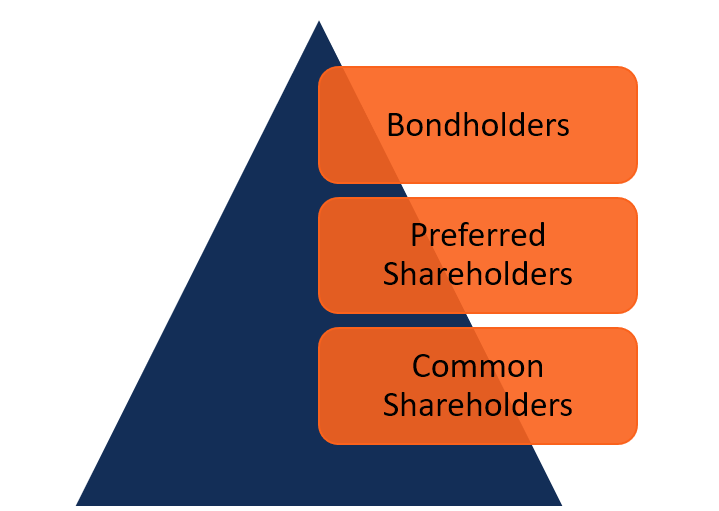
Preferred shares (also known as preferred stock or preference shares) are securities that represent buying in a corporation , and that have a priority merits over common shares on the company's assets and earnings. The shares are more senior than common stock but are more junior relative to bonds in terms of claim on assets. Holders of preferred stock are besides prioritized over holders of common stock in dividend payments.
Features of Preferred Shares
Preferred shares have a special combination of features that differentiate them from debt or common equity. Although the terms may vary, the post-obit features are mutual:
- Preference in assets upon liquidation: The shares provide their holders with priority over common stock holders to claim the company's assets upon liquidation.
- Dividend payments: The shares provide dividend payments to shareholders. The payments can be fixed or floating, based on an involvement rate benchmark such as LIBOR .
- Preference in dividends: Preferred shareholders have a priority in dividend payments over the holders of the mutual stock.
- Not-voting: Generally, the shares do not assign voting rights to their holders. Even so, some preferred shares allow its holders to vote on extraordinary events.
- Convertibility to mutual stock: Preferred shares may be converted to a predetermined number of common shares. Some preferred shares specify the appointment at which the shares can be converted, while others require approval from the lath of directors for the conversion.
- Callability: The shares can be repurchased past the issuer at specified dates.
Types of Preferred Stock
Preferred stock is a very flexible type of security. They can be:
- Convertible preferred stock: The shares can be converted to a predetermined number of mutual shares.
- Cumulative preferred stock: If an issuer of shares misses a dividend payment, the payment will be added to the next dividend payment.
- Exchangeable preferred stock: The shares tin can be exchanged for some other type of security.
- Perpetual preferred stock: There is no fixed date on which the shareholders will receive back the invested capital letter.
Advantages of Preferred Shares
Preferred shares offering advantages to both issuers and holders of the securities. The issuers may benefit in the following way:
- No dilution of control: This blazon of financing allows issuers to avoid or defer the dilution of control, as the shares do not provide voting rights or limit these rights.
- No obligation for dividends: The shares practice not force issuers to pay dividends to shareholders. For instance, if the visitor does not take enough funds to pay dividends, it may only defer the payment.
- Flexibility of terms: The company's management enjoys the flexibility to set up almost whatever terms for the shares.
Preferred shares tin likewise be an attractive alternative for investors. The investors may benefit in the following fashion:
- Secured position in case of the company'southward liquidation: Investors with preferred stock are in a more secure position relative to mutual shareholders in the result of liquidation, because they take a priority in claiming the visitor'south avails.
- Fixed income: These shares provide their shareholders with a stock-still income in the form of dividend payments.
Related Readings
Thanks for reading CFI's guide to Preferred Shares. To assistance you advance your career, check out the additional CFI resources below:
- Senior and Subordinated Debt
- Retained Earnings
- Stakeholder vs. Shareholder
- Stockholders Equity
Source: https://corporatefinanceinstitute.com/resources/knowledge/finance/preferred-shares/
0 Response to "what feature of preferred stock allows issuers to buy back their shares?"
Postar um comentário